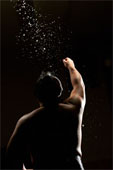
I just went to check the results of the summer tournament in Nagoya. I've been crazy busy this summer, and I got behind on my sumo! (Shame on me.)
La-di-dah. Guess what is out there, and I never even knew?
It's a sumo results page for the entire year available on Wikipedia, bless it's unreliable-informational heart.
Here's the link. WIKIPEDIA SUMO RESULTS FOR 2011. Now you can click on over there and get the update on Hakuho and Kotooshu and Kaio, who announced his retirement after 23 years in sumo.
That's a lot of years in sumo!
Another cool stat from the Nagoya tournament last month was that a rikishi with a degree from Waseda University made it into juryo (the lowest tier of the professional level) for the first time since 1933.
It sounds like a lot of guys in sumo just take the sumo-track in life and don't go after an education, so maybe this is a new thing.
Also, a former champ died, and he'd lived to the age of 72. His sumo name was Wakanaruto. It's good to know some of them live to a ripe old age--since their size looks like their life spans might be shortened by excess weight.
Just saying.
Tuesday, August 30, 2011

Monday, August 8, 2011
Slap-fest
At the beginning of a sumo match, the rikishi stand on their respective lines and when the signal is given they make their tachiai, which is their first meeting/approach. Sometimes they slam right into each other and get in a headlock (or do a mawashi grab) and sometimes they start slapping each other first. It's kind of loud, and it looks like it hurts.
No fist punching is allowed. This is not boxing or a fight club. But the slapping is acceptable, even expected. Their bronze skin gets a short beating before the two competitors latch onto each other or truly attack. It looks like it stings.
Here's a link to a youtube video of a slap fight.
In the video you can see the slapping is fierce enough to actually send one guy out of the ring. Plus you can see the decor of the sumo arena. Cool video--thanks Snowleg, whoever you are.
Good stuff.
No fist punching is allowed. This is not boxing or a fight club. But the slapping is acceptable, even expected. Their bronze skin gets a short beating before the two competitors latch onto each other or truly attack. It looks like it stings.
Here's a link to a youtube video of a slap fight.
In the video you can see the slapping is fierce enough to actually send one guy out of the ring. Plus you can see the decor of the sumo arena. Cool video--thanks Snowleg, whoever you are.
Good stuff.
Wednesday, August 3, 2011
Chikara=Power
I like the Japanese word chikara. It means power. I remember getting up early one morning in Japan and thinking, "Chikara nai." I have no power. I fell back onto my futon and went back to sleep. It happened quite a few times as I tried to bike up a steep hill in Nagano toward the Zenkoji temple. Chikara nai! The muscles in my thighs quivered. I had to just stop and let them rest.
 Zenkoji Temple is on a hilltop overlooking Nagano
Chikara is a word used well in regards to sumo. Those rikishi are huge, and they are full of power! Seeing them slam into one another like Mack trucks going 100 miles per hour, it's just ... powerful!
At the beginning of each sumo match there's a lot of ceremony. One of the things they do is drink from a little bowl of chikara mizu, power water. Then they have a piece of chikara kami placed in front of their mouths. Power paper.
The water idea, I get. Drinking in the power of the Shinto gods. Great idea!
But the paper, that was a mystery. It took me a while to find an explanation, but what I gather is that the power paper is used to hide the mouth of the rikishi while he spits out the power water.
Yet another reason I love sumo.
Zenkoji Temple is on a hilltop overlooking NaganoChikara is a word used well in regards to sumo. Those rikishi are huge, and they are full of power! Seeing them slam into one another like Mack trucks going 100 miles per hour, it's just ... powerful!
At the beginning of each sumo match there's a lot of ceremony. One of the things they do is drink from a little bowl of chikara mizu, power water. Then they have a piece of chikara kami placed in front of their mouths. Power paper.
The water idea, I get. Drinking in the power of the Shinto gods. Great idea!
But the paper, that was a mystery. It took me a while to find an explanation, but what I gather is that the power paper is used to hide the mouth of the rikishi while he spits out the power water.
Yet another reason I love sumo.
Thursday, July 28, 2011
Grace and the Rikishi
I was at a writing retreat this month and I saw a friend of mine, Deb. Deb is Japanese. She was so excited to tell me about her trip to L.A. a while back when she was able to attend a sumo tournament. I'm so jealous! She said, "The minute I saw the sumo wrestlers, I thought of you!"
I laughed--when people see sumo, they think of me. Ha haha.
Disclosure: I'm a 5 foot 1 inch white woman not really in a sumo weight class.
Another friend listening was perplexed as to why you'd want to attend such a thing, and wrinkled her nose.
Deb said, "They're amazing. They're so huge, you can't even believe it. But they've got a grace, almost a weightlessness. They float."
She also said it was easy to tell the guys who were just there for fun, who had no training. They stomped and lumbered and were gawky and clumsy and just fat. But the real sumo wrestlers weren't fat. They were taut and like helium balloons with strength.
Thank you, Deb. Very cool.
I laughed--when people see sumo, they think of me. Ha haha.
Disclosure: I'm a 5 foot 1 inch white woman not really in a sumo weight class.
Another friend listening was perplexed as to why you'd want to attend such a thing, and wrinkled her nose.
Deb said, "They're amazing. They're so huge, you can't even believe it. But they've got a grace, almost a weightlessness. They float."
She also said it was easy to tell the guys who were just there for fun, who had no training. They stomped and lumbered and were gawky and clumsy and just fat. But the real sumo wrestlers weren't fat. They were taut and like helium balloons with strength.
Thank you, Deb. Very cool.
Tuesday, July 5, 2011
My 5K and the Sumo Wrestler's Marathon
I ran my first 5K this month. I'm no runner. At all. I hid in my neighbor's car during the track meet in junior high to avoid having to compete in the 880 relay. I know, I know. I let the team down.
But for some reason this year, I ended up running. Well, it was about the kid. He needed to do some running and didn't want to run alone, so I ran. But I didn't relish it. At first I could only do about a half mile walking then collapsed for the rest of the day. By the time our 5K race came along, though, I was THERE! I could do it, and I didn't even need an ambulance. Pretty cool.
I realize this is nothing, but it's something to me.
This morning I found this article that was also something:
 http://www.mediaite.com/online/400-pound-sumo-wrestler-plans-to-run-l-a-marathon/
400 Pound Sumo Wrestler Plans To Run L.A. Marathon
He’s got his heart set on finishing the Los Angeles Marathon–and winning a Guinness World Record. Kelly Gneiting, who calls himself the Fat Man, is a three-time national champion sumo wrestler who weighs in at just over 400 pounds. Hardly the light-on-your-feet body type of your traditional marathoner. Gneiting’s six feet tall and has a 60-inch waist. And he says he’s all athlete. “I honestly think I’m one of the best athletes in the world,” he tells the LA Times.
read more
Good for this guy! I wish I'd been there to cheer him on.
But for some reason this year, I ended up running. Well, it was about the kid. He needed to do some running and didn't want to run alone, so I ran. But I didn't relish it. At first I could only do about a half mile walking then collapsed for the rest of the day. By the time our 5K race came along, though, I was THERE! I could do it, and I didn't even need an ambulance. Pretty cool.
I realize this is nothing, but it's something to me.
This morning I found this article that was also something:
http://www.mediaite.com/online/400-pound-sumo-wrestler-plans-to-run-l-a-marathon/400 Pound Sumo Wrestler Plans To Run L.A. Marathon
He’s got his heart set on finishing the Los Angeles Marathon–and winning a Guinness World Record. Kelly Gneiting, who calls himself the Fat Man, is a three-time national champion sumo wrestler who weighs in at just over 400 pounds. Hardly the light-on-your-feet body type of your traditional marathoner. Gneiting’s six feet tall and has a 60-inch waist. And he says he’s all athlete. “I honestly think I’m one of the best athletes in the world,” he tells the LA Times.
read more
Good for this guy! I wish I'd been there to cheer him on.
Thursday, April 28, 2011
Why not in America?
My question is why isn't sumo more popular in America? I've wondered this a long time, ever since I started being a sumo fan.
I asked my sister this last night. She crinkled up her eyes and nose and winced and said, "Uh, maybe it's because most of us think it's kind of gross."
Maybe.
I asked my sister this last night. She crinkled up her eyes and nose and winced and said, "Uh, maybe it's because most of us think it's kind of gross."
Maybe.
Wednesday, March 16, 2011
Earthquake & Tsunami
So worried about my friends in Japan. I've been emailing with my closest friend Kitamura-san. She doesn't live in the north where the quake and tsunami happened, but her life has been affected nonethless. Her husband was missing after work during the power outages, and she spent a scary night. Her parents live in Nagano, and a secondary quake happened there. Fortunately, the Japanese are architecturally prepared for even large quakes, and no homes were damaged, although the quake was very large.
However, I have a cousin who just returned from Sendai. He says all his aquaintances but one are safe. He knew a person through an Eikaiwa (English instruction) class who was killed in the tsunami, and several people who lost their homes.
This whole thing is tragic.
I have full faith, however, that the Japanese people will pull together and work hard to get through it. They are amazing people, resilient, dutiful, diligent. My prayers are with them.
However, I have a cousin who just returned from Sendai. He says all his aquaintances but one are safe. He knew a person through an Eikaiwa (English instruction) class who was killed in the tsunami, and several people who lost their homes.
This whole thing is tragic.
I have full faith, however, that the Japanese people will pull together and work hard to get through it. They are amazing people, resilient, dutiful, diligent. My prayers are with them.
Wednesday, February 2, 2011
More Bad News for Sumo
Well, today's news reported more bad headlines about sumo. It's been a rough year, what with the baseball-and-mafia betting scandal of last summer, Asashoryu's misdeeds and untimely retirement. Now, this: a bout-fixing scandal. And not just simple bout fixing. In fact, the scandal has the potential to reduce the ancient sport into nothing better than American television wrestling, play acting and show.
According to UPI news, text messages indicate that 13 sumo wrestlers were engaged in not just once but routine bout fixing. This revelation comes after years of suspicions, but now it's been confirmed thanks to the wonders of texting.
 A photo like this...never happens. It's a bow of shame and apology.
I wonder what will happen next. Will there be a major housecleaning? If so, will it be sufficient to win back the trust of the fans? Or would even that be too little too late? Is sumo finished?
Very sad.
According to UPI news, text messages indicate that 13 sumo wrestlers were engaged in not just once but routine bout fixing. This revelation comes after years of suspicions, but now it's been confirmed thanks to the wonders of texting.
I wonder what will happen next. Will there be a major housecleaning? If so, will it be sufficient to win back the trust of the fans? Or would even that be too little too late? Is sumo finished?
Very sad.
Saturday, January 22, 2011
Black and White, and Grey
The mawashi loin coverings that the sumo wrestlers wear are either black or white. The amateurs wear white, and the pros wear black.
A lot of things in life are black and white.
And then there's some grey.
I just found a mindblowing blog. It's by Mike Weseman, and he's a sumo guru. He's met the actual wrestlers, hung out with them, really follows their careers. He writes the kind of blog I'd love to write if I had more time to dedicate to my sumo hobby and if I weren't a super-busy mom of five kids with a billion duties in that realm of life. He and some friends co-author the blog, and each of the guys has his own take on the sport. They even post the latest news, by date. It's a super great resource. Check it out: SUMO TALK. Awesome blog.
But the blog post that has my head spinning is Mike's opinion on the fallout from last autumn's scandal. Yes, the JSA is going through the motions of ousting the yakuza (Japanese mafia) from the sport. Good news, right? Not to Mike. He writes in great detail why it's wrong for sumo to get rid of mob money, and why it could be the end of all the small stables.
Who'da thunk.
I'm not sure where I come down on that, but it is very interesting to me to read the other side of the story. It goes to show me that there are two sides to every story, even ones that seem like they're completely black and white.
A lot of things in life are black and white.
And then there's some grey.
I just found a mindblowing blog. It's by Mike Weseman, and he's a sumo guru. He's met the actual wrestlers, hung out with them, really follows their careers. He writes the kind of blog I'd love to write if I had more time to dedicate to my sumo hobby and if I weren't a super-busy mom of five kids with a billion duties in that realm of life. He and some friends co-author the blog, and each of the guys has his own take on the sport. They even post the latest news, by date. It's a super great resource. Check it out: SUMO TALK. Awesome blog.
But the blog post that has my head spinning is Mike's opinion on the fallout from last autumn's scandal. Yes, the JSA is going through the motions of ousting the yakuza (Japanese mafia) from the sport. Good news, right? Not to Mike. He writes in great detail why it's wrong for sumo to get rid of mob money, and why it could be the end of all the small stables.
Who'da thunk.
I'm not sure where I come down on that, but it is very interesting to me to read the other side of the story. It goes to show me that there are two sides to every story, even ones that seem like they're completely black and white.
Sunday, January 2, 2011
I was just thinking about one result of last year's betting scandal. Remember, it was betting on baseball, not sumo. But it was sumo wrestlers betting on baseball. Via the yakuza.
Afterwards, the powers that be wanted to prove they were purging the sport of the corruption of mafia ties. Mafia ties didn't go over very well with the fans. So, to prove they were severing any ties (which had never been sanctioned, just existing under the radar), they made a major announcement to all the audience at the beginning of the July basho in Nagoya (if I remember right, that's where this happened.) It was basically, "All righty then, everyone here who is a member of the mafia is invited to leave right now."
Okay. So I'm laughing at the thought of this. Right. I can just see it now. Announcement goes off. A row of fifteen guys in expensive suits perk up, look around, point to their own chests, ask something equivalent to "Moi?", shrug, get up and leave.
Yeah. I love the jokey ineffectiveness of this. It's almost like they were doing it in jest.
Then again, maybe it worked.
Afterwards, the powers that be wanted to prove they were purging the sport of the corruption of mafia ties. Mafia ties didn't go over very well with the fans. So, to prove they were severing any ties (which had never been sanctioned, just existing under the radar), they made a major announcement to all the audience at the beginning of the July basho in Nagoya (if I remember right, that's where this happened.) It was basically, "All righty then, everyone here who is a member of the mafia is invited to leave right now."
Okay. So I'm laughing at the thought of this. Right. I can just see it now. Announcement goes off. A row of fifteen guys in expensive suits perk up, look around, point to their own chests, ask something equivalent to "Moi?", shrug, get up and leave.
Yeah. I love the jokey ineffectiveness of this. It's almost like they were doing it in jest.
Then again, maybe it worked.
Sunday, December 12, 2010
All around the Kokugikan, National Sumo Arena, in Tokyo are these banners that hang and depict almost life-size pictures (drawings) of the top sumo wresters. There's an order to it, but I'm still finding out what that is. I wonder who draws those. They kind of remind me of the velvet Elvis paintings you used to see in the 1970s.
There's so much ceremony to the sport, it seems almost like a religion in itself. Take this pic from Life Magazine, for instance. I can almost smell the chamomile oil from here.
 Getting their hair done is a ceremony. Walking into the ring is a ceremony. Retirement is a major ceremony. Every aspect seems to be ceremony. Quite fascinating. I think even when they get their portrait done to hang in the Kokugikan hall as champs must be a ceremony too.
I love finding fun things to look up, just when I'm in the mood to find out more about what it must feel like to be there. The latest thing I found is just to google "Kokugikan image" or "chonmage image" or "chanko nabe image." But not "rikishi image," since all that brings up is a creepy World Wrestling Federation guy.
Fun times, googling sumo stuff. Makes me want to go see it.
There's so much ceremony to the sport, it seems almost like a religion in itself. Take this pic from Life Magazine, for instance. I can almost smell the chamomile oil from here.
I love finding fun things to look up, just when I'm in the mood to find out more about what it must feel like to be there. The latest thing I found is just to google "Kokugikan image" or "chonmage image" or "chanko nabe image." But not "rikishi image," since all that brings up is a creepy World Wrestling Federation guy.
Fun times, googling sumo stuff. Makes me want to go see it.
Sunday, September 26, 2010
How I'm like Sylvester Stallone despite the fact I'm a housewife in rural America
Sylvester Stallone was in Tokyo this week promoting his new movie. He stopped in at the Ryogoku Kokugikan to watch the September basho--and he loved it. According to the STORY in the Japan Times, the Rocky star was impressed with the simplicity of the sport and the fury of it.
I can't disagree.

But another note--Hakuho, the Mongolian Stallion, has now stretched his winning streak into a stunning 61 wins. Wow! Way to go, Hakuho! Between Hakuho and Baruto, I'd say despite the crud in Nagoya, there's still a bright hope for us fans.
I can't disagree.

But another note--Hakuho, the Mongolian Stallion, has now stretched his winning streak into a stunning 61 wins. Wow! Way to go, Hakuho! Between Hakuho and Baruto, I'd say despite the crud in Nagoya, there's still a bright hope for us fans.
Monday, September 13, 2010
Sumo in Everyday Life
I was eating my green salad and eating my tortilla soup, minding my own business at a restaurant in the desert hills of Prescott, Arizona--a land far, far away from any sumo ring.
Suddenly my eye lighted on a poster there on the wall of the Red Robin, right above the giant poster of the Chicago World's Fair--two sumo wrestlers poised and ready for their tachiai--initial attack, each in the squat, each with a single hand on the ground, ready to spring. Between them on the ground sat some kind of Red Robin food--a burger probably. It should have been the tortilla soup, though. That stuff was killer.
Wow. Sumo--it's where you least expect it.
Suddenly my eye lighted on a poster there on the wall of the Red Robin, right above the giant poster of the Chicago World's Fair--two sumo wrestlers poised and ready for their tachiai--initial attack, each in the squat, each with a single hand on the ground, ready to spring. Between them on the ground sat some kind of Red Robin food--a burger probably. It should have been the tortilla soup, though. That stuff was killer.
Wow. Sumo--it's where you least expect it.
Saturday, August 21, 2010
Food for Thought
When I was in Japan, one night at our English class a student brought a little styrofoam container of "food" for us America-jin teachers to taste.
It was crickets.
Sauteed in soy sauce and sugar.
At first I thought, no way. Not eating bugs. Not a chance. You can't make me, can't pay me enough. I'd seen these in the grocery store--in the produce section, or was it the snack section?-- before and had mentally decided the bug-eaters had to be out of their minds.
Then I asked why.
Why did Japanese people think eating crickets was such a grand idea?
My friend answered, "After World War II, there was almost no food in the country. Some families had nothing." She knew someone who had one pumpkin for their whole family to last an entire winter. "Eventually the people started going up into the mountains to scrounge for insects. Crickets were the most filling. Now we eat them to remember. Remember what they sacrificed."
Oh.
She went on to tell me (and this was her opinion, so if someone has a different one, sorry. Just sharing hers.) that when the Marshall Plan went into effect and the United States sent rice and rice and more rice, the people were so thankful. (Although it surely took a lot of humility to accept it for many) that the began calling the U.S. "Beikoku"--the Rice Country.
The word for breakfast there is "asagohan." Morning rice. Lunch is "gohan." Rice. Dinner is "yuhan." Evening rice. So for America to become the Rice Country, that meant a lot.
I placed the cricket in my mouth.
I felt the spiny bristles of its back legs prick my tongue.
I chewed and swallowed...
So grateful for daily bread.
Or rice.
It was crickets.
Sauteed in soy sauce and sugar.
At first I thought, no way. Not eating bugs. Not a chance. You can't make me, can't pay me enough. I'd seen these in the grocery store--in the produce section, or was it the snack section?-- before and had mentally decided the bug-eaters had to be out of their minds.
Then I asked why.
Why did Japanese people think eating crickets was such a grand idea?
My friend answered, "After World War II, there was almost no food in the country. Some families had nothing." She knew someone who had one pumpkin for their whole family to last an entire winter. "Eventually the people started going up into the mountains to scrounge for insects. Crickets were the most filling. Now we eat them to remember. Remember what they sacrificed."
Oh.
She went on to tell me (and this was her opinion, so if someone has a different one, sorry. Just sharing hers.) that when the Marshall Plan went into effect and the United States sent rice and rice and more rice, the people were so thankful. (Although it surely took a lot of humility to accept it for many) that the began calling the U.S. "Beikoku"--the Rice Country.
The word for breakfast there is "asagohan." Morning rice. Lunch is "gohan." Rice. Dinner is "yuhan." Evening rice. So for America to become the Rice Country, that meant a lot.
I placed the cricket in my mouth.
I felt the spiny bristles of its back legs prick my tongue.
I chewed and swallowed...
So grateful for daily bread.
Or rice.
Friday, August 20, 2010
Kitchen Patrol
NOTE: I wrote this draft and meant to publish it at the beginning of July. When I went to check out the rankings I stumbled onto the news of the scandal (!) and got distracted and forgot to post this. It's still got some good information about the sumo lifestyle, even though it's a bit old. Apologies, sumo fans!
The July Basho in Nagoya begins this week. This is the schedule for all the basho (tournaments) of the whole year 2010. According to the Goo Sumo (Grand Sumo Kyokai) the first day of the July tournament is Sunday the 11th. The rankings were announced on Monday this week, the 5th. I think it must be nerve-wracking for the rikishi to wait between tournaments to see where they are ranked for the upcoming tournament. Even though the tournaments do happen every other month (the odd months) all year long, the rankings from the previous tournament don't get recalculated until just the week before the next tournament, so I'm sure sometimes the wrestlers don't even know which tier they will be competing in. I think that would drive me crazy.
I was reading about the rankings this week here. The tiers are divided like a pyramid, with the largest number of wrestlers in the lower ranks, and fewer and fewer as the skill level progresses. There is only one yokozuna, grand champion, but there are hundreds of jonokuchi, which are the bottom ranked amateurs.
The dividing line between the amateur level and the professional level comes between makushita and juryo tiers. I read about the lifestyle leap between these levels, that the change between being a grunt amateur and a lap of luxury professional is a huge chasm. In fact, some of the rikishi consider the transition between these two levels to be more important and almost a greater victory than the leap into the sekitori or championship contender levels.
From what I understand, the reason for this is the life of the amateur level sumo wrestler basically bites. He has to get up early, no breakfast (as mentioned in an earlier post) has to go to work in the kitchen or cleaning somewhere, slaves for his senpai, or senior ranked person, has to do demeaning tasks for him like wipe his sweat, etc. He gets the worst of everything, only gets a tiny stipend, doesn't get paid for his wrestling if he wins, and is basically lower than dirt.
However, if he can make that big jump into juryo, suddenly our guy is no longer the slave. In fact, he gets his own kohai, or junior level guy being his tsukebito, or servant-person. He gets paid for bout or tournament wins, gets out of kitchen duty, can sign those handprint autograph papers, and goes to practice first thing in the morning instead of good old KP. Sometimes a guy will even get his own sleeping quarters in the stable, and best of all, the hazing stops.
It sounds like what a lot of those lower level guys dream of. For sure. I myself would love to get out of kitchen duty every once in a while. I guess I'd better go put the pasta on to boil and stop thinking about sumo.
I'll check out the rankings later...
The July Basho in Nagoya begins this week. This is the schedule for all the basho (tournaments) of the whole year 2010. According to the Goo Sumo (Grand Sumo Kyokai) the first day of the July tournament is Sunday the 11th. The rankings were announced on Monday this week, the 5th. I think it must be nerve-wracking for the rikishi to wait between tournaments to see where they are ranked for the upcoming tournament. Even though the tournaments do happen every other month (the odd months) all year long, the rankings from the previous tournament don't get recalculated until just the week before the next tournament, so I'm sure sometimes the wrestlers don't even know which tier they will be competing in. I think that would drive me crazy.
I was reading about the rankings this week here. The tiers are divided like a pyramid, with the largest number of wrestlers in the lower ranks, and fewer and fewer as the skill level progresses. There is only one yokozuna, grand champion, but there are hundreds of jonokuchi, which are the bottom ranked amateurs.
The dividing line between the amateur level and the professional level comes between makushita and juryo tiers. I read about the lifestyle leap between these levels, that the change between being a grunt amateur and a lap of luxury professional is a huge chasm. In fact, some of the rikishi consider the transition between these two levels to be more important and almost a greater victory than the leap into the sekitori or championship contender levels.
From what I understand, the reason for this is the life of the amateur level sumo wrestler basically bites. He has to get up early, no breakfast (as mentioned in an earlier post) has to go to work in the kitchen or cleaning somewhere, slaves for his senpai, or senior ranked person, has to do demeaning tasks for him like wipe his sweat, etc. He gets the worst of everything, only gets a tiny stipend, doesn't get paid for his wrestling if he wins, and is basically lower than dirt.
However, if he can make that big jump into juryo, suddenly our guy is no longer the slave. In fact, he gets his own kohai, or junior level guy being his tsukebito, or servant-person. He gets paid for bout or tournament wins, gets out of kitchen duty, can sign those handprint autograph papers, and goes to practice first thing in the morning instead of good old KP. Sometimes a guy will even get his own sleeping quarters in the stable, and best of all, the hazing stops.
It sounds like what a lot of those lower level guys dream of. For sure. I myself would love to get out of kitchen duty every once in a while. I guess I'd better go put the pasta on to boil and stop thinking about sumo.
I'll check out the rankings later...
The World Sits Up and Takes Notice
Did I not post here a couple of months ago that sumo is the next big wave? That it was just poised on the cusp of being one of the most noticed new sports, that it is just about to take off?
I believe I did right here.
Well, dun-dun-dun! My prediction came true! Maybe not in the way I originally imagined, but like politicians often say, no press is bad press. When public awareness goes up, it goes up.
The August 12 issue of Time Magazine featured a fantastic slide show on sumo's woes entitled "The Changing Face of Sumo Wrestling." Included is a great black and white pic of Baruto in the ring (love the smiling sumo.) Plus, there are a lot of the pictures of young men who are going into training. I love that the reporter calls the mawashi diaper thingy a "loin cloth belt" and that the high school kids are going shirtless at school. Who knew?
Go to the link and check out the pictures and captions. A lot of it repeats what I've posted about below, but the pictures really make it come alive!
There was a second article this week called "Cleaning Up Sumo." It's not available in its entirety online yet, but the blurb gives a hint about the way wrestlers come up through the training process, beginning even as pre-teens. It's a little disturbing. I had no idea they "farmed" them so young. Kinda icky in the text.
The phrase that struck me most was a quote from the high school sumo coach when he said parents used to send their sons to the sumo stables to make sure they got enough to eat. Now Japanese kids get plenty to eat at home and are too soft to sumo. (I'm paraphrasing.) They don't want to work that hard, he said. Times change.
High school sumo teams.
Maybe it's coming soon (in the next three decades!) to a high school near you.
I believe I did right here.
Well, dun-dun-dun! My prediction came true! Maybe not in the way I originally imagined, but like politicians often say, no press is bad press. When public awareness goes up, it goes up.
The August 12 issue of Time Magazine featured a fantastic slide show on sumo's woes entitled "The Changing Face of Sumo Wrestling." Included is a great black and white pic of Baruto in the ring (love the smiling sumo.) Plus, there are a lot of the pictures of young men who are going into training. I love that the reporter calls the mawashi diaper thingy a "loin cloth belt" and that the high school kids are going shirtless at school. Who knew?
Go to the link and check out the pictures and captions. A lot of it repeats what I've posted about below, but the pictures really make it come alive!
There was a second article this week called "Cleaning Up Sumo." It's not available in its entirety online yet, but the blurb gives a hint about the way wrestlers come up through the training process, beginning even as pre-teens. It's a little disturbing. I had no idea they "farmed" them so young. Kinda icky in the text.
The phrase that struck me most was a quote from the high school sumo coach when he said parents used to send their sons to the sumo stables to make sure they got enough to eat. Now Japanese kids get plenty to eat at home and are too soft to sumo. (I'm paraphrasing.) They don't want to work that hard, he said. Times change.
High school sumo teams.
Maybe it's coming soon (in the next three decades!) to a high school near you.
Tuesday, August 17, 2010
Yes, this is still Earth
So, way back when, I was walking up and down this street in Japan. I was looking for something (can't remember what, but then, I can't remember much of anything that happens, now that I've become a mom. Brain power: zero.) I was on this street, which was a covered shopping area about a block long. The cover high above was opaque but let through a filtered sunlight and had a pink tint to it, bathing the whole area in a pink light. Intermittently, there were brilliant green slats, and they broke up the rose colored world.
The shopping venues seemed like a carnival, with mylar Hello! Kitty balloons, everything available in all pastel choices, and playing be-bop happy music as I walked. Stores had designer clothing, raw fish with their eyes staring out at me, pachinko parlors, ceramic good luck cats with a single paw held up by the cats' faces in greeting. There was a little shrine in one alcove.
Teenagers squatted in clusters, low on their haunches, with spiky and wildly colored hair and skin tight jeans, smoking or playing jan ken po (rock paper scissors) competitively, and laughing raucous laughter--for Japanese people, who are generally pretty soft spoken.
One street vendor had a cart like a hot dog cart, and atop it in steaming tins of water floated white tubes and triangles and circles. They were spotted brown, like tortillas are. I didn't dare try them--and when they were lifted out with tongs, they instantly shrunk to about 2/3 their size. (Later I learned they were something like fish stick hot dogs, but I didn't find that out while I was in Japan, so I never got brave enough to try the magical shrinking geometry.)
Every few feet there were vending machines--with bottled beer, rice, batteries, beetles, cigarettes, huge bottles of Fanta soda pop, underwear, farm fresh eggs. You name it, it could be had from the vending machine.
The music piped in through the street's speakers switched to "He Ain't Heavy, He's My Brother." The place smelled of incense and fish and old rain.
It was so different from the dry, broad-sky place where I grew up. So far away, in so many ways. And beautiful and strange at once. I tried my best to take it all in, and I am sure there are a thousand details I can't recall, and maybe some I'm blending in from a different street, but it was a feeling and a place at the same time.
Beautiful and foreign and strange.
I can't wait to go back.
The shopping venues seemed like a carnival, with mylar Hello! Kitty balloons, everything available in all pastel choices, and playing be-bop happy music as I walked. Stores had designer clothing, raw fish with their eyes staring out at me, pachinko parlors, ceramic good luck cats with a single paw held up by the cats' faces in greeting. There was a little shrine in one alcove.
Teenagers squatted in clusters, low on their haunches, with spiky and wildly colored hair and skin tight jeans, smoking or playing jan ken po (rock paper scissors) competitively, and laughing raucous laughter--for Japanese people, who are generally pretty soft spoken.
One street vendor had a cart like a hot dog cart, and atop it in steaming tins of water floated white tubes and triangles and circles. They were spotted brown, like tortillas are. I didn't dare try them--and when they were lifted out with tongs, they instantly shrunk to about 2/3 their size. (Later I learned they were something like fish stick hot dogs, but I didn't find that out while I was in Japan, so I never got brave enough to try the magical shrinking geometry.)
Every few feet there were vending machines--with bottled beer, rice, batteries, beetles, cigarettes, huge bottles of Fanta soda pop, underwear, farm fresh eggs. You name it, it could be had from the vending machine.
The music piped in through the street's speakers switched to "He Ain't Heavy, He's My Brother." The place smelled of incense and fish and old rain.
It was so different from the dry, broad-sky place where I grew up. So far away, in so many ways. And beautiful and strange at once. I tried my best to take it all in, and I am sure there are a thousand details I can't recall, and maybe some I'm blending in from a different street, but it was a feeling and a place at the same time.
Beautiful and foreign and strange.
I can't wait to go back.
Saturday, August 7, 2010
Back in the Saddle Again
It sounds like the sport is trying to get itself up and going again after the scandal.
The annual "Summer Tour" of the outlying parts of Japan (also called Natsu Jungyo) is underway. Each summer the sport goes on tour to take the excitement to fans who live in outlying areas. Often the rikishi only give a faint show of effort during these bouts, as the outcome does not go toward any official ranking. Most people believe these bouts are just for show. However, as they try to ramp up back to respectability, reports say the wrestlers are not just phoning it in, but instead are giving it their all, even during these tour bouts.
I think that's good news. A complete humbling is necessary for real repentance, I believe.
There have been some glitches. The first stop on the tour was in the northwest of the island of Honshu in Niigata Prefecture. The suspension of some of the top wrestlers, like that of Chiyohakuho and Toyonoshima, already came to an end and they performed for this event this week. I wonder, however, if a suspension that does not even last past the end of the rest period between tournaments is a suspension at all.
Fans must have wondered something similar, too. Only about 60% of the tickets for this event were sold. Another city's stop of the tour, the city of Aomori at the very tip top of Honshu, canceled their event completely out of disgust with the scandal.
Other cities are still on the roster. Fukushima, Akita, and Kitaakita are upcoming.
If the wrestlers do not rally and clean up their act, I wonder if the fans will even allow the sport to survive in its present form. Even if they do, it's a little iffy.
Still, they have to start somewhere. The tour coach reminded the wrestlers, both juniors and high professionals, that the fans are their reason for being, so to give their best effort. Those guys can clearly give a big effort. I hope it's enough.
 Also, there's an update on the resignation of the chairman. He did resign, for like 10 minutes. Then he was back. Now he's mad about leaks that he plans to resign due to the fact he is undergoing surgery for stomach cancer. Not due to the fact that the sport over which he should be on the watchtower is imploding. I, for one, am suspicious.
The annual "Summer Tour" of the outlying parts of Japan (also called Natsu Jungyo) is underway. Each summer the sport goes on tour to take the excitement to fans who live in outlying areas. Often the rikishi only give a faint show of effort during these bouts, as the outcome does not go toward any official ranking. Most people believe these bouts are just for show. However, as they try to ramp up back to respectability, reports say the wrestlers are not just phoning it in, but instead are giving it their all, even during these tour bouts.
I think that's good news. A complete humbling is necessary for real repentance, I believe.
There have been some glitches. The first stop on the tour was in the northwest of the island of Honshu in Niigata Prefecture. The suspension of some of the top wrestlers, like that of Chiyohakuho and Toyonoshima, already came to an end and they performed for this event this week. I wonder, however, if a suspension that does not even last past the end of the rest period between tournaments is a suspension at all.
Fans must have wondered something similar, too. Only about 60% of the tickets for this event were sold. Another city's stop of the tour, the city of Aomori at the very tip top of Honshu, canceled their event completely out of disgust with the scandal.
Other cities are still on the roster. Fukushima, Akita, and Kitaakita are upcoming.
If the wrestlers do not rally and clean up their act, I wonder if the fans will even allow the sport to survive in its present form. Even if they do, it's a little iffy.
Still, they have to start somewhere. The tour coach reminded the wrestlers, both juniors and high professionals, that the fans are their reason for being, so to give their best effort. Those guys can clearly give a big effort. I hope it's enough.

Thursday, August 5, 2010
A Bodyslam of Epic Proportions
The whole sport is getting rocked.
Yesterday the Chairman of the Japan Sumo Association (the sport's governing body) stepped down. Resigned. Shocking. Here's a link to the story. http://bit.ly/chLmfO The article also reads that there will be reformed instituted, reforms recommended by an independent panel, which they hope will cut the ties between sumo and the mafia and baseball betting via the underworld.
It's shocking for a lot of reasons. The main shocker to me is because I have heard how much money it costs for someone to buy a spot on the JSA. It's *millions* of yen. And they don't come up very often. A member of the JSA has to have been a former champion. These are guys with huge ego and huge bank accounts. They aren't simply appointed bureaucrats or middle managers. They have been the big guns for years.
The other reason is that to resign is to lose face. Losing face in Japan--well, now, that's a big deal. It could have repercussions on his family for a long time. It's not like in America where we are shocked for about six months, then the famous person can reinvent himself or herself and rise like a phoenix. They remember there, and forgiveness doesn't seem to exist. Even if it did, I think the person who felt like he/she had lost face would remember and feel shamed into a life of obscurity.
 Ooh. The look on his face is bleak. But, it doesn't look like this guy used to wrestle. Everything I've read says the JSA is only allowed to be the former wrestlers. I need to dig deeper, considering this guy's normal looking size. That, or else he ended his fighting career and he went back to normal eating and sleeping habits and dropped the poundage. Ii, na. That would be nice, wouldn't it.
This whole scandal is getting me down. Where's the integrity, the purity of the game? As the Japanese say, iya da, na. Yuck.
Yesterday the Chairman of the Japan Sumo Association (the sport's governing body) stepped down. Resigned. Shocking. Here's a link to the story. http://bit.ly/chLmfO The article also reads that there will be reformed instituted, reforms recommended by an independent panel, which they hope will cut the ties between sumo and the mafia and baseball betting via the underworld.
It's shocking for a lot of reasons. The main shocker to me is because I have heard how much money it costs for someone to buy a spot on the JSA. It's *millions* of yen. And they don't come up very often. A member of the JSA has to have been a former champion. These are guys with huge ego and huge bank accounts. They aren't simply appointed bureaucrats or middle managers. They have been the big guns for years.
The other reason is that to resign is to lose face. Losing face in Japan--well, now, that's a big deal. It could have repercussions on his family for a long time. It's not like in America where we are shocked for about six months, then the famous person can reinvent himself or herself and rise like a phoenix. They remember there, and forgiveness doesn't seem to exist. Even if it did, I think the person who felt like he/she had lost face would remember and feel shamed into a life of obscurity.

This whole scandal is getting me down. Where's the integrity, the purity of the game? As the Japanese say, iya da, na. Yuck.
Tuesday, August 3, 2010
Scandal. Ew.
First off, as a fan, I find little joy in reporting this. It's a huge disappointment. It reminds me of the summer major league baseball went on strike and then spent nearly a decade trying to get their fans back. Only this could be worse.
As of yesterday, the first arrest of yakuza (Japanese mafia) members was made in connection with the betting scandal that came to light just before the Nagoya basho (touranment) last month. It sounds like this is just the tip of the iceberg.
The yakuza gangsters were part of the Yamaguchi-gumi, the nation's largest crime syndicate. The story of that can be read here.
The information began to come to light late in June, and as details emerged, Japan was shocked to discover that a number of the stars of the sport, including the top ranked Japanese native rikishi, Kotomitsuki, who got SACKED on the 4th of July. Whoa. He allegedly placed millions of yen worth of illegal bets through the mob, not on sumo bouts, but on baseball.
And Kotomitsuki was ranked really high--Ozeki. That's champion. Just below Grand Champion, Yokozuna. He was one of the deities..
Not only Kotomitsuki went down, though. A couple of dozen wrestlers, officials, and stablemasters bit the dust in the scandal, including a stablemaster named Otake, who borrowed nearly 30 million yen from Kotomitsuki to pay off the debts he himself had stacked up against the gangsters. Yikes.

The NHK is the Japanese national television station. For the past 57 years they have televised every sumo tournament. But, in light of the corruption, they opted to not broadcast the July basho in Nagoya. Shame is a big leverage tactic in Japan, I noticed while I was there, and this is evidence of how shameful the revelations were.
According to the story, in recent tournaments yakuza were given front row seats to the tournaments. I read in a different article that prior to the Nagoya tournament bouts each day, an announcer came over the loudspeaker and invited "anyone associated with organized crime to exit the building," which made me laugh at the image of a guy in an expensive suit looking around, pointing at himself, shrugging and then voluntarily getting up to leave. But it's a nice show of effort, right? Bless their hearts.
The sport has been rocked over the past three years with reports of horrible hazing (like that poor kid who got killed in training by the beer bottle beating) and bout-fixing.
I hope the sport can survive. Fans' tolerance level only goes so far. In Japan, there's a fan mentality pervading almost every aspect of life. If something is popular almost everyone likes it. If it goes out of favor, it can go out BIG time. Kind of precarious and teetering time for the national sport where the main skill necessary is balance.
As of yesterday, the first arrest of yakuza (Japanese mafia) members was made in connection with the betting scandal that came to light just before the Nagoya basho (touranment) last month. It sounds like this is just the tip of the iceberg.
The yakuza gangsters were part of the Yamaguchi-gumi, the nation's largest crime syndicate. The story of that can be read here.
The information began to come to light late in June, and as details emerged, Japan was shocked to discover that a number of the stars of the sport, including the top ranked Japanese native rikishi, Kotomitsuki, who got SACKED on the 4th of July. Whoa. He allegedly placed millions of yen worth of illegal bets through the mob, not on sumo bouts, but on baseball.
And Kotomitsuki was ranked really high--Ozeki. That's champion. Just below Grand Champion, Yokozuna. He was one of the deities..
Not only Kotomitsuki went down, though. A couple of dozen wrestlers, officials, and stablemasters bit the dust in the scandal, including a stablemaster named Otake, who borrowed nearly 30 million yen from Kotomitsuki to pay off the debts he himself had stacked up against the gangsters. Yikes.

The NHK is the Japanese national television station. For the past 57 years they have televised every sumo tournament. But, in light of the corruption, they opted to not broadcast the July basho in Nagoya. Shame is a big leverage tactic in Japan, I noticed while I was there, and this is evidence of how shameful the revelations were.
According to the story, in recent tournaments yakuza were given front row seats to the tournaments. I read in a different article that prior to the Nagoya tournament bouts each day, an announcer came over the loudspeaker and invited "anyone associated with organized crime to exit the building," which made me laugh at the image of a guy in an expensive suit looking around, pointing at himself, shrugging and then voluntarily getting up to leave. But it's a nice show of effort, right? Bless their hearts.
The sport has been rocked over the past three years with reports of horrible hazing (like that poor kid who got killed in training by the beer bottle beating) and bout-fixing.
I hope the sport can survive. Fans' tolerance level only goes so far. In Japan, there's a fan mentality pervading almost every aspect of life. If something is popular almost everyone likes it. If it goes out of favor, it can go out BIG time. Kind of precarious and teetering time for the national sport where the main skill necessary is balance.
Subscribe to:
Posts (Atom)
